Learn About Our History
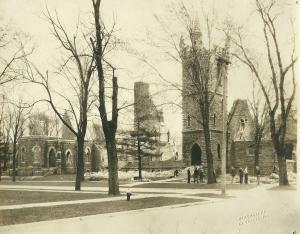
For the first adult formation program of 2026, please join us as we learn more about the history of Emmanuel and of the Episcopal Church. As you may know, our old church building burned down in December 1924 and the first service in the "new" church was on Easter Sunday, 1926. We want to celebrate the legacy of worship at Emmanuel through this special formation series. Each session will stand alone but we hope you'll be able to join us for as many of them as possible.
All sessions will begin in Beaudway Hall from about 11:15am-noon. The second and third sessions will also be available on Zoom. The first session will not because we will be showing videos and walking around.
Session 1 - March 15, 2026
There is a lot we don't know about the fire on December 1, 1924. But parish historian Kathy Clark and special guest (and former Emmanuelite!) Michael Bolton will try to piece together what we do know. They will then explain the process of rebuilding that followed, including a discussion of our striking Gothic Revival architecture. There will be a video presentation showcasing photographs of the construction. Finally, learn about the changes to the church since 1926.
Session 2 - March 22, 2026
The period of building the new church (1924-1926) was an important time in liturgical history as it marked the transition from the 1892 Book of Common Prayer (BCP) to the 1928 BCP. When the 1892 book was released, no doubt its drafters thought it would last as long as the first American book of 1789 had done. But the world changed too quickly in the early 20th century and the Church was forced to go back into the revision process far sooner than expected. Join us as Rev. Dave provides an overview of the first three prayer books of the Episcopal Church and the process by which liturgical revision is carried out. We will also look at some of the major changes between 1892 and 1928 specifically in order to understand the issues being discussed in 1926.
Session 3 - April 12, 2026
After taking two weeks off for Palm Sunday and Easter, we will conclude with an experiential unpacking of the day's worship service, which will be conducted from the old BCP. Rather than a lecture, we will ask participants to describe how it sounded and felt compared to our more modern regular worship style.